



VIETNAM PRECISION INDUSTRIAL No.1 CO., LTD.
VPIC1 3S WMS Digital Transformation
As a 100% FDI enterprise with capital from Taiwan, belonging to the Eurocham Group, VPIC1 operates in the field of manufacturing and fabricating precision components. Its products include components for motorcycles, automobiles, recreational vehicles, and medical equipment. This enterprise is currently a strategic partner of renowned corporations such as Honda, Toyota, Ford, Piaggio, Ducati, France bed, Polaris, and Yamaha Vietnam.
-
Industry
-
Company Size
+3500 employees
-
Solutions
3S WMS
01
Launching the digital transformation journey
In the 4.0 era, as technology drives the changes of the times, most businesses focus on improving production processes to enhance quality and better meet customer requirements. As a crucial part of the production process, warehouses are also prioritized for digital transformation by leaders for more effective management. Following this trend, VPIC1 has made a strong transformation by collaborating with ITG to implement the 3S WMS smart warehouse management solution.
As a 100% FDI enterprise with capital from Taiwan, belonging to the Eurocharm Group, Vietnam Precision Industrial No. 1 Co., Ltd (VPIC1) operates in the field of manufacturing and fabricating precision components, with products including components for motorcycles, automobiles, recreational vehicles, and medical equipment. This enterprise is currently a strategic partner of renowned corporations such as Honda, Toyota, Ford, Piaggio, Ducati, France bed, Polaris, and Yamaha Vietnam. Not stopping at the domestic market, VPIC1’s products are also well-received in European and American markets.
Ranked among the Top 500 largest enterprises in Vietnam, the factory in Vinh Phuc has an area of up to 43,300 $m^2$ with more than 3,500 employees, including 6 raw material warehouses, 6 component warehouses, and 6 finished goods warehouses. With the goal of optimizing warehouse areas, let’s see which problems the 3S WMS smart warehouse management solution helps VPIC1 solve.
02
Digitalizing warehouse management processes with QR Code
Inventory management with QR Codes
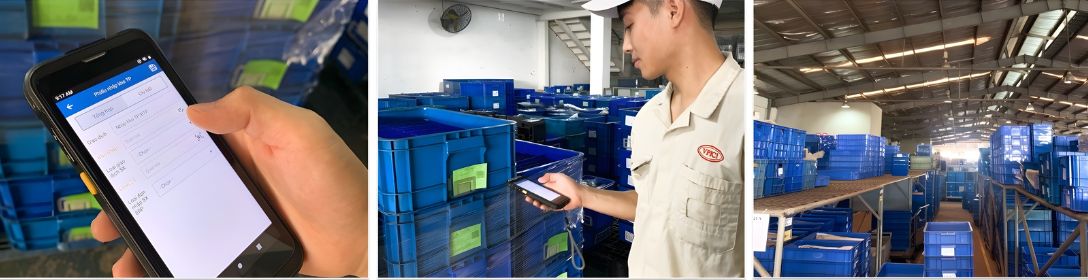
Monitoring and controlling goods throughout the entire value chain—from purchasing and production to delivering finished products to customers—is a task that requires significant resources. Therefore, to ensure accurate and easily traceable product information, VPIC1 has applied a QR Code system to digitalize information, replacing forms and paperwork. Data entry for warehouse receiving/shipping, transfers, and inventory counting is collected automatically via Handy terminal devices. All data is verified and accurately recorded into the system in real-time.
As a result, the work of employees at VPIC1 is processed faster and more efficiently. Managers can also easily grasp the situation, thereby optimizing storage and reducing inventory costs.
Material management by multiple units of measure
Operating in the mechanical engineering sector, VPIC1 faced a challenge where material units of measure differed from the time of purchase (weight in kilograms) to the time of issuance for production (units in pieces/bars), making management difficult. By implementing 3S iWarehouse, the enterprise solved this problem by converting units of measure for easier management, while simultaneously applying QR Codes for new product identification.
From the input stage, instead of employees manually recording and spending time entering data into Excel, the 3S iWarehouse solution is designed to connect directly with electronic scales to support recording and automatically pushing information to the ERP system. Data is reconciled between the actual quantity delivered and the quantity on the purchase order, helping accountants easily handle the issue of surplus or shortage of raw materials.
For materials such as steel pipes and large-volume steel plates requiring partial issuance, VPIC1 is now able to issue materials piece by piece. Accordingly, the 3S iWarehouse system queries data and records the actual remaining quantity in the warehouse, providing the enterprise with greater flexibility in the process of issuing materials for production.
Warehouse management by location using QR Codes
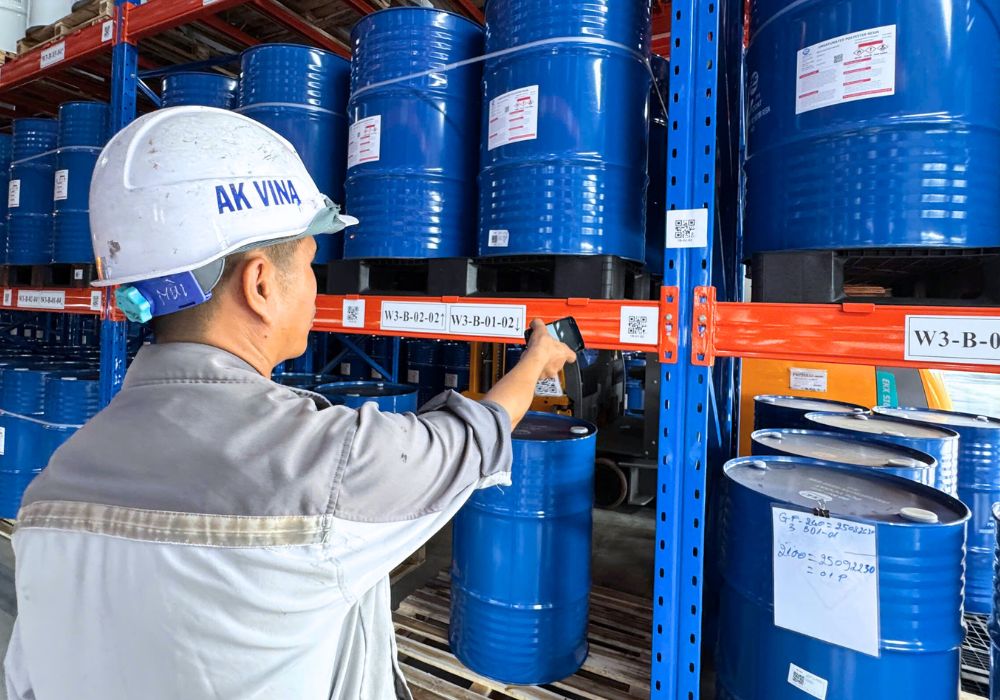
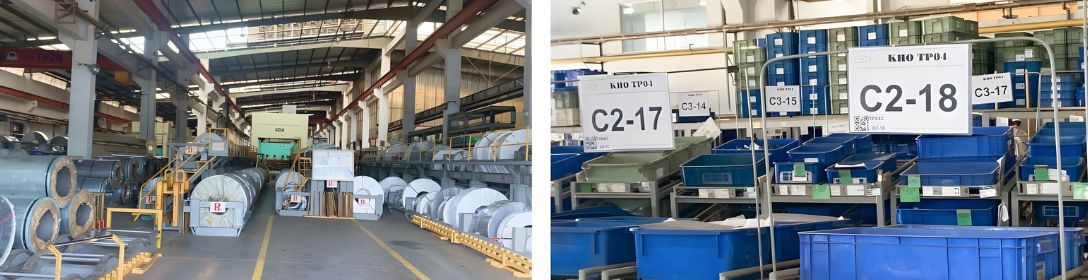
The large warehouse area and continuous production pace present the enterprise with difficulties in issuing raw materials for production. VPIC1 quickly transitioned from traditional warehouse management to location-based management. Accordingly, even new employees can easily identify the location of raw materials/components/finished goods by scanning QR Codes. With the ability to record locations in real-time, the material retrieval process at VPIC1 has been significantly shortened, thereby ensuring production continuity.
Furthermore, VPIC1’s entire warehouse has been digitalized into the system, becoming an electronic warehouse layout version that visually displays warehouse capacity. By clearly seeing vacant positions in real-time, the enterprise can maximize its warehouse storage capacity.
03
Product traceability
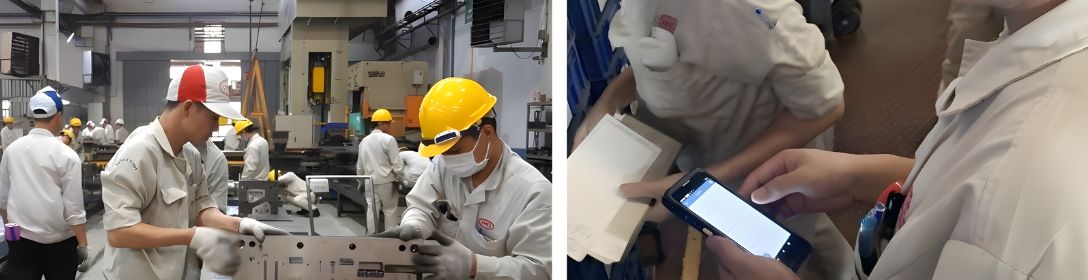
Going beyond location-based warehouse management, as a partner of global corporations, VPIC1 requires traceability to quickly identify the causes of defective products. Therefore, the enterprise implemented the 3S WMS system with the goal of two-way traceability: upward from raw materials and downward from finished products. In the upward direction from raw materials, VPIC1 tracks which production orders the materials were issued to. In the downward direction from finished products, the system supports the enterprise in identifying: finished product lots, purchase orders, suppliers, and delivery dates.
The ability to have an overview of warehouse management activities with accurate and detailed information helps managers quickly identify issues for timely improvement.
04
Smart warehouse version
By implementing the 3S WMS solution and unifying warehouse management on a single system, VPIC1 has achieved remarkable results:
Key Objectives Achieved
-

Digitalization of the entire warehouse
-
Real-time warehouse receiving/shipping management
-
Location-based management and visualization of the entire warehouse system
-
Raw material traceability
-
Electronic scale integration and automated data recording