



FDI Japanese Companies
4 Digital Transformation Success Stories from Japan’s Leading Corporations: Driving Q-C-D Excellence in the Data-Driven Era
The Digital Transformation Journey of Leading Japanese FDI Corporations in Vietnam. Through the 3S ERP & 3S iFACTORY ecosystem, ITG Technology has demonstrated its ability to address complex operational challenges, bring greater transparency to enterprise data, and standardize manufacturing processes — all while driving Q-C-D excellence: Quality, Cost, and Delivery.
-
Industry
-
Company Size
+10 000 người
-
Solutions
3S ERP
3S MES
3S SPS
3S WMS
01
Data — The Key to Realizing Q-C-D Excellence
Q-C-D (Quality, Cost, and Delivery) represents the three core priorities of management and operations for Japanese FDI enterprises. Maintaining product quality, controlling costs, and ensuring on-time delivery are essential to building and sustaining a competitive advantage. However, as production scales up, optimizing all three dimensions simultaneously through manual management becomes increasingly challenging.
Against this backdrop, data has emerged as a key enabler of digital transformation — serving as a “common language” that connects information from the strategic level to day-to-day execution. A seamless flow of data across the organization enables teams and functions to collaborate more effectively, optimize Q-C-D performance, and make timely, informed decisions.
The following four success stories showcase representative projects implemented by ITG Technology for Japanese FDI enterprises in Vietnam. Each project addresses a specific operational challenge, demonstrating how digital solutions and data-driven management can contribute to achieving tangible improvements in Quality, Cost, and Delivery.
02
Success Story 1: Connecting Supply Chain Data on a Unified Platform at Canon Electronics Vietnam
Company Overview
Canon Electronics Vietnam (CEV) is a 100% Japanese-owned export processing enterprise and a member of the Canon Group. Established in 2008, CEV specializes in the manufacturing and assembly of high-precision electronic components, including components for imaging equipment, consumer electronics, office equipment, and other applications.
Operational Challenge
With its extensive supplier network, Canon Electronics Vietnam needs to ensure that procurement activities remain closely aligned with production plans. This requires seamless data connectivity across the entire process — from production planning and procurement to suppliers — to support material planning, purchase order issuance, and order fulfillment tracking.
The 3S ERP project not only addresses CEV’s current operational challenges but also establishes a solid foundation for further automation and digital transformation initiatives in the future.

The 3S ERP project is just the beginning. Looking ahead, **ITG and Canon will continue to explore new opportunities for collaboration in advancing manufacturing automation and building a smarter, more connected factory.

Mr. Tran Duy Dong
Director of the PA Department

Solution Implemented
Canon Electronics Vietnam implemented ITG Technology’s 3S ERP system to seamlessly connect data across departments. Starting from production planning, the system supports material requirements planning, purchase order (PO) issuance, and integration with the Supplier Portal to track orders, manage updates, and align delivery schedules.
The data flow then extends to warehouse management and delivery operations, enabling teams across the organization to work from a single, unified source of data. This provides real-time visibility into inventory status and streamlines the processing and execution of delivery orders.

Business Value Delivered
- Seamless Data Connectivity: Connect production planning, procurement, warehouse operations, and suppliers on a unified platform.
- Synchronized Procurement: Align purchasing plans and purchase orders with production plans for seamless execution and tracking.
- Enhanced Supplier Collaboration: Enable real-time order tracking and updates with suppliers through the Supplier Portal.
- Supply Visibility & Control: Maintain end-to-end data visibility to ensure a stable and responsive supply process for production.
03
Success Story 2: Taking Control of Production Schedules with Real-Time Data at Panasonic Appliances Vietnam
Company Overview
Panasonic Appliances Vietnam is a 100% foreign-owned enterprise and a member of the Panasonic Group. Established in 2003, the company currently employs more than 1,000 people across two facilities in Hanoi and Hung Yen.
Its Hung Yen factory specializes in washing machine manufacturing and serves as an R&D center for home appliance products, supporting both the domestic and export markets.
Operational Challenge
At Panasonic Appliances Vietnam’s Hung Yen factory, the plastic injection molding workshop is responsible for producing components for finished-product assembly lines. Production progress at the workshop directly impacts downstream operations and overall production schedules.
As a result, production scheduling needs to be continuously updated based on machine availability, mold status, and real-time shop-floor conditions. At the same time, management requires real-time visibility into production progress to quickly adjust plans and respond to unexpected changes.
Solution Implemented
Panasonic Appliances Vietnam’s Hung Yen factory implemented ITG Technology’s 3S MES for its plastic injection molding workshop to automate production planning and shorten scheduling lead times.
The system integrates IIoT connectivity with seven injection molding machines, automatically capturing production output and updating data in real time. Data from production plans
Business Value Delivered


04
Success Story 3: Controlling Material Flow on a Unified Data Platform at Hitachi Astemo Vinh Phuc
Company Overview
Hitachi Astemo Vinh Phuc is a member of the Hitachi Astemo Group, a global automotive technology company with nearly 140 locations across 27 countries and regions. In Vietnam, the company specializes in the high-volume manufacturing of automotive and motorcycle parts and components, while managing thousands of material and component SKUs to support its production operations.
Operational Challenge
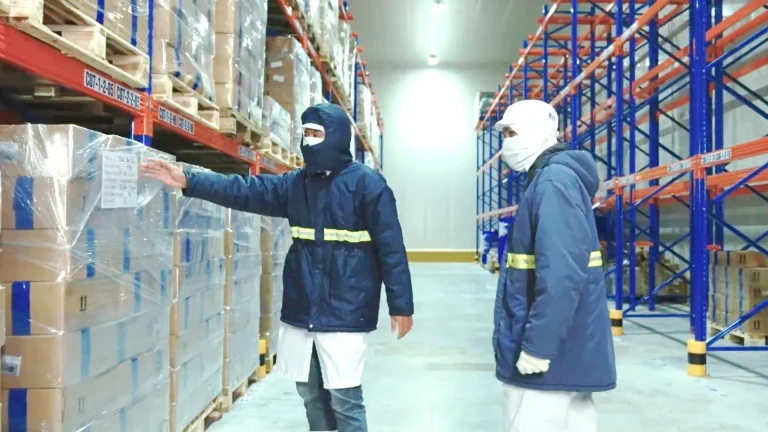
Hitachi Astemo Vinh Phuc’s production operations require end-to-end control of material flows, from the component warehouse through production and quality control to the finished-goods warehouse before shipment.
This creates a critical need for seamless data synchronization across departments to manage goods receipt and issuance, material allocation, and end-to-end traceability throughout the production process.
Previously, Hitachi Astemo Vinh Phuc managed warehouse receipts and issues using manual tools. We now aim to transition these processes to a software-based system, enabling more effective management of parts and finished-goods inventory, as well as inbound and outbound warehouse operations. In particular, the system is expected to improve the allocation of parts to assembly lines and provide better control over the flow of goods delivered to customers.

Mr. Sadaaki Murata
Production Director at Hitachi Astemo Vinh Phuc

Solution Implemented
Hitachi Astemo Vinh Phuc implemented ITG Technology’s 3S SPS and 3S WMS solutions to synchronize production planning and warehouse management data on a unified platform.
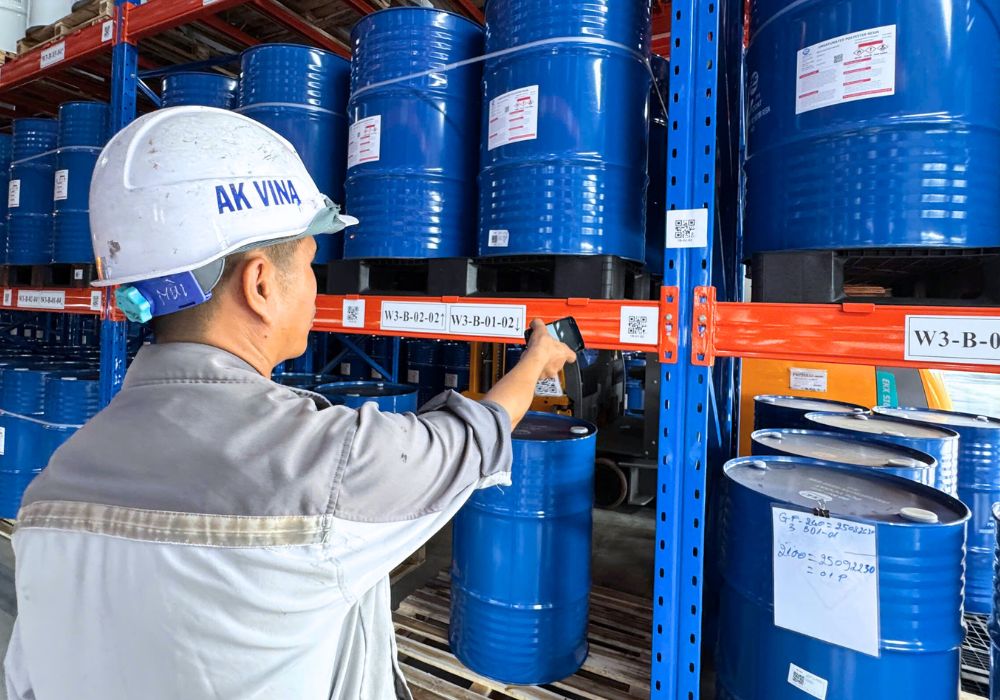
The solutions digitize warehouse operations through QR codes and Handy Terminals, while an automated cross-check process helps prevent part-number errors. Centralized inventory data and seamless data handover across departments provide greater visibility and consistency throughout operations.
The system also synchronizes barcode data from suppliers, provides FIFO-based alerts, and integrates with shop-floor equipment to automatically capture production data. Together, these capabilities enhance end-to-end traceability and support continuous optimization of Quality, Cost, and Delivery (Q-C-D) performance.

Business Value Delivered
- End-to-End Material Flow Control: Connect data across component warehouses, production, quality control (QC), and finished-goods warehouses on a unified platform.
- Standardized Warehouse Management: Manage goods receipt, issuance, transfers, and stocktaking via Handy Terminals, with real-time data updates.
- Enhanced Control & Traceability: Monitor inventory and manage material allocation based on the FIFO principle, while enabling end-to-end product traceability.
- Accurate Shipment Control: Cross-check shipment information before delivery to minimize errors and ensure greater accuracy throughout the outbound process.
05
Success Story 4: Automated Production Planning & Capacity Planning at Rhythm Precision Vietnam
Company Overview
Rhythm Precision Vietnam (RPV) is a 100% Japanese-owned enterprise and a member of the Tohoku Rhythm Group. Located in the Noi Bai Industrial Park, the company currently operates two factories and six production workshops, specializing in the design, manufacturing, and assembly of electronic components for global corporations such as Canon, Panasonic, Fujifilm, and Brother.
Operational Challenge
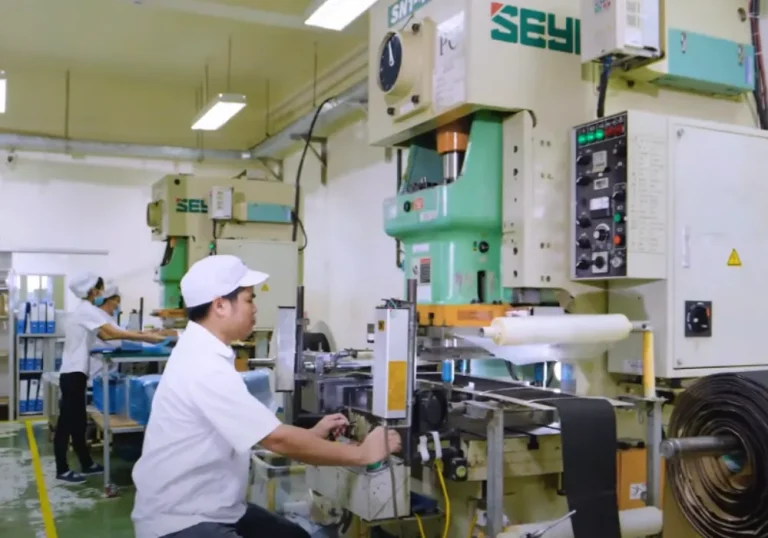
Rhythm Precision Vietnam operates six production workshops, each with distinct manufacturing characteristics and planning methods. Every day, RPV continuously receives forecast (FC) data and purchase orders (POs) from customers. The high volume of data and frequent changes require the company to rapidly calculate material requirements, balance production capacity, and develop appropriate plans for each workshop.
In addition, RPV needs to integrate its data with customers’ ERP systems to automate order intake, share production plans, material requirements plans, and delivery schedules, while standardizing reports in line with the
Solution Implemented
Rhythm Precision Vietnam implemented ITG Technology’s 3S ERP to digitize and centrally manage production planning across all six workshops on a unified platform.
The system automates the processing of forecast (FC) data and purchase orders (POs), calculates material requirements, and generates production plans tailored to the specific characteristics of each workshop. It also enables two-way integration with customers’ ERP systems, synchronizing data to support seamless production planning and delivery operations.

Business Value Delivered


06
Trusted by Japanese FDI Enterprises
The four success stories featured in this article demonstrate that each Japanese FDI enterprise faces its own unique operational challenges — from production planning and supply chain management to material control and production capacity planning. Yet, they share a common goal: building a unified data ecosystem that connects operations end to end, enabling more effective management and helping turn Q-C-D.

The projects delivered for Panasonic Appliances, Canon Electronics, Hitachi Astemo, and Rhythm Precision represent some of the key milestones in ITG Technology’s journey of supporting Japanese FDI enterprises in their digital transformation. Today, ITG Technology’s solutions are also being adopted by enterprises from South Korea, Singapore, France, and other multinational corporations. By partnering with businesses across global supply chains, ITG Technology continues to demonstrate the capabilities of “Make in Vietnam” solutions, while showcasing its ability to meet the diverse management and o